You can always contact Heronden Independent Vets for calm, practical advice
This week my fathers dog, Cilantro, had a bad case of the runs.
Vomiting and diarrhoea are among the most common reasons dogs need veterinary advice. Many mild stomach upsets settle quickly, but persistent, severe or repeated digestive symptoms can sometimes point to an underlying health concern that needs professional attention.
At Heronden Independent Veterinary Practice, we understand how worrying it can be when your dog is suddenly not themselves. We are based in Tenterden, Kent, and care for dogs from the surrounding countryside and nearby communities. For owners searching for independent vets near me in the UK, within 10km of Tenterden, your best bet would be to give us a call or get them to us. Our role is to offer clear, sensible guidance and to help you decide when your dog should be seen.
This article explains common causes of vomiting and diarrhoea in dogs, what to watch for at home, and when it is best to contact us at Heronden Independent Vets.
What Can Cause Vomiting or Diarrhoea in Dogs?
Digestive problems can happen for many different reasons. Some dogs develop mild stomach upset after eating something unusual, while others may become unwell because of infection, inflammation, pain, toxins or an underlying medical condition.
Possible causes include:
- Sudden dietary changes
- Eating something unsuitable, rich, spoiled or unfamiliar
- Food intolerance or dietary sensitivity
- Intestinal parasites
- Bacterial or viral infections
- Pancreatitis
- Ingestion of toxins, plants, medicines or chemicals
- Swallowed foreign objects, such as toys, bones, socks or stones
- Inflammatory bowel disease or other intestinal conditions
- Kidney, liver or hormonal disease
- Stress, travel or changes in routine
Because different conditions can look very similar at first, it is helpful to watch the whole picture: appetite, thirst, energy, behaviour, toileting, pain, and whether symptoms are improving or getting worse.
When Mild Digestive Upset May Be Monitored
A single episode of vomiting or a short bout of mild diarrhoea does not always mean there is an emergency, particularly if your dog is bright, comfortable, drinking normally and has no other symptoms.
However, monitoring should be sensible and time-limited. If symptoms continue, recur, worsen, or your dog seems unwell, please contact us for advice. Puppies, older dogs, very small dogs, pregnant dogs, and dogs with existing medical conditions can deteriorate more quickly and should be treated with extra caution.
Please do not give human medicines, leftover pet medicines or over-the-counter remedies unless a veterinary surgeon has advised this for your dog. Some medicines that seem harmless to people can be dangerous for dogs.
When to Contact Heronden Independent Vets
Please contact us promptly if your dog:
- Vomits repeatedly or cannot keep water down
- Has diarrhoea that is severe, persistent or worsening
- Has blood in vomit or stool, or black/tarry stools
- Seems weak, collapsed, unusually quiet or very uncomfortable
- Refuses food or water
- Shows signs of dehydration, such as tacky gums, sunken eyes or marked lethargy
- Has a painful, bloated or tense abdomen
- May have eaten a toxin, medicine, plant, chemical, toy, bone, sock or other foreign object
- Is a puppy, senior dog, very small dog, pregnant dog or medically vulnerable dog
- Has symptoms lasting more than 24 hours, or sooner if they are unwell
If your dog has eaten something potentially or dangerous, please contact us or our emergency veterinary service straight away. Do not wait for symptoms to appear. Time is of the essence.
How Digestive Problems Are Assessed
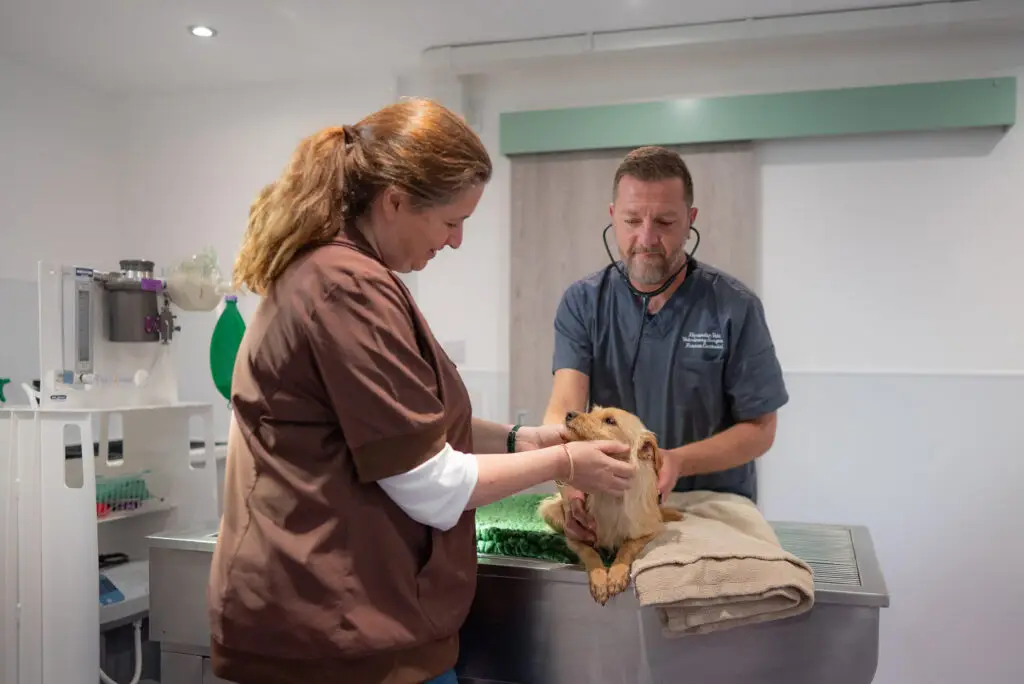
The first step is usually a careful conversation and a clinical examination. We may ask when the symptoms started, how often your dog has vomited or passed diarrhoea, what they have eaten, whether they are drinking, and whether there is any possibility of toxin exposure or a swallowed object.
Depending on your dog’s symptoms and examination findings, our vets may recommend tests such as:
- Blood tests
- Faecal testing
- Urine testing
- X-rays
- Ultrasound
- Further investigations where clinically appropriate
We will explain why any test is being recommended and discuss options with you. The aim is to understand the cause of the symptoms, not simply to suppress them without knowing what is happening underneath.
Treatment and Recovery
Treatment depends on the likely cause, severity and your dog’s general condition. Mild cases may need a carefully managed diet, anti-sickness treatment prescribed by a vet, hydration support or monitoring with a clear plan.
More serious cases may require fluid therapy, pain relief, hospital care, imaging, further tests, or treatment for infection, pancreatitis, toxin exposure, obstruction or another underlying condition.
Our priority is to keep your dog comfortable, support safe recovery and help reduce the chance of repeat episodes where possible. We will also advise on feeding, gradual return to normal food and when to come back for review.
Repeated or Ongoing Digestive Problems
Repeated episodes of vomiting or diarrhoea should not simply be dismissed as a “sensitive stomach”. Some dogs do have dietary sensitivities, but recurring symptoms can also be linked to chronic pancreatitis, intestinal disease, parasites, hormonal conditions, liver or kidney problems, or other medical issues.
If your dog has repeated bouts, it is worth discussing a longer-term plan. This may include diet review, parasite control, diagnostic testing, monitoring, or treatment tailored to the underlying cause. Each dog is different, and a careful, individual approach is usually the most useful.
What You Can Do at Home While Waiting for Advice
While waiting to speak to us or attend an appointment, keep fresh water available. Do not force your dog to eat or drink. If they are vomiting repeatedly, seem weak, are very young or old, or may have eaten something harmful, contact us urgently.
It can help to make a note of:
- When vomiting or diarrhoea began
- How many times it has happened
- Whether there is blood, mucus or unusual colour
- What your dog has eaten recently
- Any possible access to bins, compost, toxins, medicines, plants, toys or foreign objects
- Appetite, thirst and energy levels
- Any recent diet change, travel, boarding, stress or medication
These details can be extremely helpful during the consultation.
Why Pet Owners Choose Heronden Independent Veterinary Practice
When things get worrisome people search for independent vets near me in the UK. If your within 10km of Tenterden come to us, we will fit you in that day as soon as possible. We have a wonderful veterinary team that listens, explains clearly and gets to know our cats & dog as individuals that matter.
Heronden Independent Veterinary Practice is a family-owned, independent practice, with a brilliant familial team.
We value calm communication, proportionate advice and thoughtful clinical care. In a countryside community, trust is built by remembering the nervous spaniel, the elderly Labrador, the terrier who eats things he absolutely should not, and the owners who know when something is not quite right.
Final Thoughts
Occasional digestive upset can happen in any dog, but persistent vomiting, diarrhoea, lethargy, dehydration, blood in the stool, pain, repeated symptoms or suspected toxin exposure should never be ignored.
If you are worried about your dog’s digestive health, please contact Heronden Independent Vets. We can help you decide whether your dog needs to be seen, how urgently, and what the safest next step should be.
Important Information
This article is intended as general information for dog owners and is not a substitute for veterinary examination, diagnosis or treatment. Every dog is different. If your dog is unwell, has persistent or severe vomiting or diarrhoea, may have eaten something harmful, or you are worried, please contact Heronden Independent Vets for advice.
No medicine, supplement or home treatment should be given unless recommended by a veterinary surgeon who has considered your dog’s circumstances. In an emergency, contact the practice or an out-of-hours veterinary service without delay.